


Description
GTA warehouses often pick the wrong electric counterbalance because the aisle is tight and the dock is not. This guide explains when a 3-wheel electric forklift is the right call versus a 4-wheel truck for Ontario indoor operations.
3-Wheel vs. 4-Wheel Electric Forklift in Ontario: Which Truck Fits Your Warehouse?
TLDR
A 3-wheel electric forklift turns tighter and fits older GTA buildings with short aisles. A 4-wheel electric forklift carries more, travels farther, and stays more stable on docks and longer runs. Neither replaces a reach truck in very narrow rack. Match the chassis to aisle width, heaviest pallet, travel distance, and floor quality, then rent or buy from a Mississauga dealer that can service the unit. Call Alteon Equipment at +1 905 238 8881 or email Sales@alteonequipment.com if you want that match done against real specs, not a brochure.
Table of Contents
- What the Two Chassis Actually Are
- Turning Radius and Aisle Reality
- Capacity, Lift Height, and Stability
- Docks, Floors, and Travel Distance
- When a 3-Wheel Electric Forklift Wins
- When a 4-Wheel Electric Forklift Wins
- 3-Wheel vs. Reach Truck vs. Pallet Jack
- Ontario Training, Inspection, and Indoor Air
- Rent, Buy Certified Used, or Mix the Fleet
- How Alteon Equipment Helps
What the Two Chassis Actually Are
Both machines are sit-down electric counterbalance forklifts. They lift with a mast, not a boom. They belong indoors on reasonably smooth concrete. The difference is the rear axle.
A 3-wheel truck uses two drive wheels in front and a single steer wheel (or dual wheels on one steer assembly) at the rear. That layout lets the rear of the truck swing in a tighter circle.
A 4-wheel truck uses two drive wheels and two steer wheels. The extra contact patch helps stability, residual capacity at height, and travel on imperfect dock plates.
Dealers in Ontario, including Liftow and Alta Material Handling, stock both 3-wheel and 4-wheel electric rentals because GTA buildings are not one size. Mississauga and Brampton infill warehouses often need the 3-wheel. Newer 3PL boxes in Vaughan and Milton often prefer the 4-wheel.
For a broader class map, see Alteon's guide to forklift types.
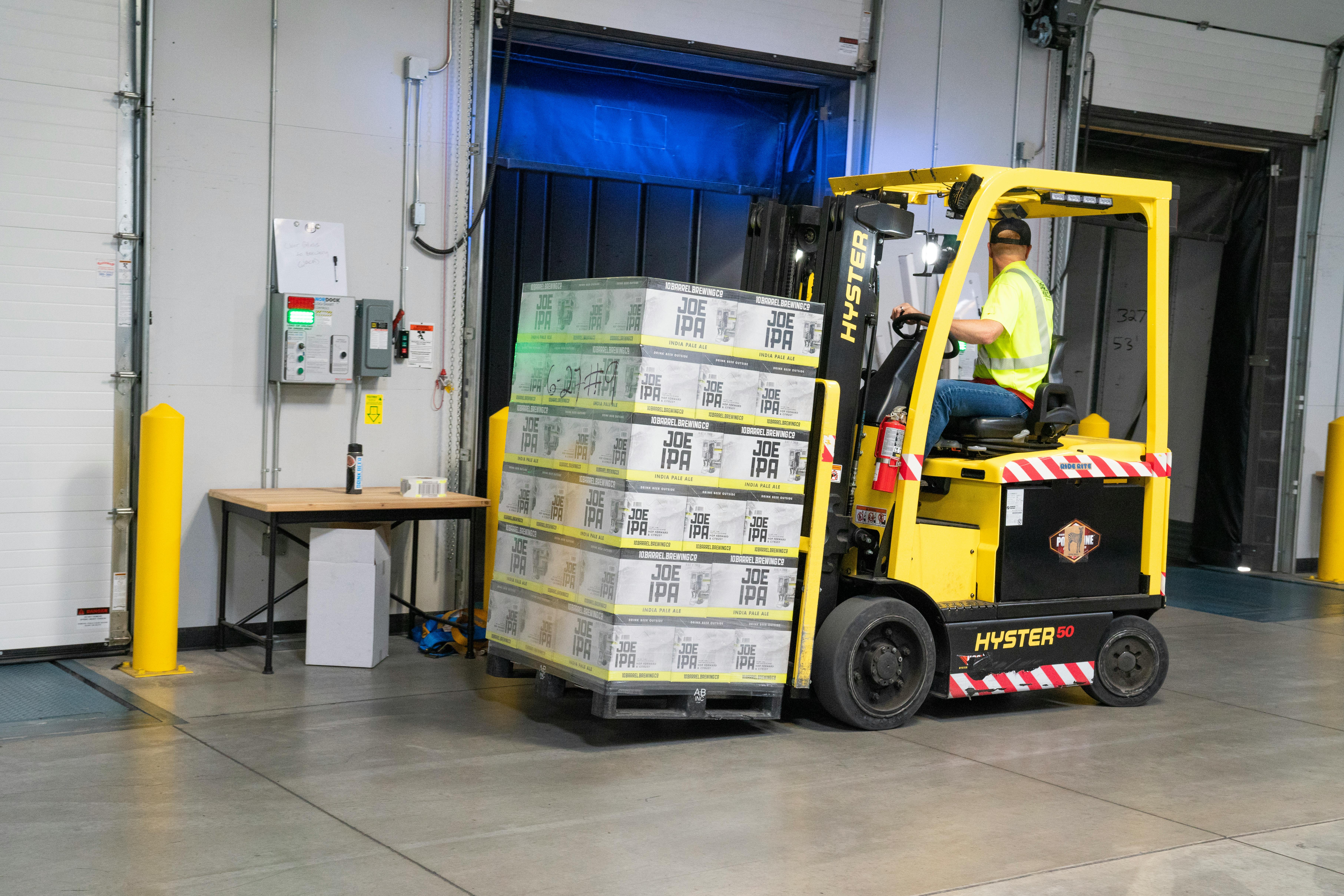
Indoor counterbalance work in a typical warehouse: mast lift, pallet on forks, rack in the background. Confirm aisle width and residual capacity before you choose 3-wheel or 4-wheel.
Turning Radius and Aisle Reality
Aisle width is the first filter. If operators already clip rack uprights or take three-point turns at every intersection, a 4-wheel sit-down is the wrong chassis.
Summit Handling publishes example Toyota specs: a 3-wheel electric with as little as a 58-inch outside turn radius versus about 65 inches on a comparable 4-wheel electric. They also note a shorter length to fork face on the 3-wheel (about 6 ft versus about 7.5 ft on the 4-wheel example). Those numbers are model-specific. Always check the data plate and the turning-radius drawing for the unit you will actually run.
What that means on a GTA floor:
- Older Mississauga and Etobicoke buildings with 10-12 ft working aisles often need the 3-wheel if you insist on a sit-down counterbalance.
- If the aisle is already a true narrow-aisle layout, skip both and look at a narrow aisle forklift or a reach truck.
- Intersections, battery-room doors, and trailer interiors matter as much as the main aisle. Measure the tightest 90-degree turn, not the nicest lane.
A 3-wheel does not magically fit every tight space. Overhead guards, mast tilt, and load length still eat clearance.
Capacity, Lift Height, and Stability
Do not buy from the max pounds sticker. Capacity falls as you lift, as you sideshift, and as load centre moves forward.
Summit’s comparison of standard Toyota electrics is a useful starting point, not a quote: their example 4-wheel sits around 4,000 lb with a higher listed mast, while the example 3-wheel sits around 3,000 lb and a slightly lower max height. Toyota Lift Northwest uses the same class of examples. Real fleets run other capacities. The pattern holds: 4-wheel trucks usually keep more residual capacity at height.
Use a 4-wheel when you:
- Stack mixed 3,000-5,000 lb pallets into selective rack
- Run frequent high lifts where the load centre is not perfect
- Need more stability on dock boards and slight floor pitch
Use a 3-wheel when you:
- Stay in the 2,500-3,500 lb class on level indoor floors
- Care more about turns than residual capacity at the top beam
- Keep travel speeds moderate and ramps rare
If your heaviest SKU is already at the edge of a 3,000 lb 3-wheel chart at 180 inches, do not make it work. Step up the chassis or step down the pick height.
Capacity selection still starts with how to choose forklift capacity.
Docks, Floors, and Travel Distance
Three-wheel trucks prefer smooth, level concrete. Four-wheel trucks tolerate dock plates, expansion joints, and longer runs better.
Summit notes travel speed examples around 9.9 mph loaded on a 3-wheel versus about 11.5 mph on a 4-wheel. Speed is not the point. Dock work is. A single rear steer point on a 3-wheel can feel nervous on a worn leveller. Many GTA 3PLs run 4-wheel electrics at the door and keep 3-wheels (or walkies) in the rack.
Floor quality checklist for Ontario sites:
- Cracked or heaved slabs in older Brampton plants: 4-wheel or pneumatic-tire class, not a compact 3-wheel
- Tight indoor grocery back rooms: 3-wheel or walkie, not a long-wheelbase 4-wheel
- Mixed indoor/outdoor with a yard: neither electric sit-down is a rough-terrain truck; see rough terrain forklifts in Ontario
Battery and charger still decide uptime. A 3-wheel does not charge faster just because it is smaller. Plan the room with electric forklift battery charging in Ontario.
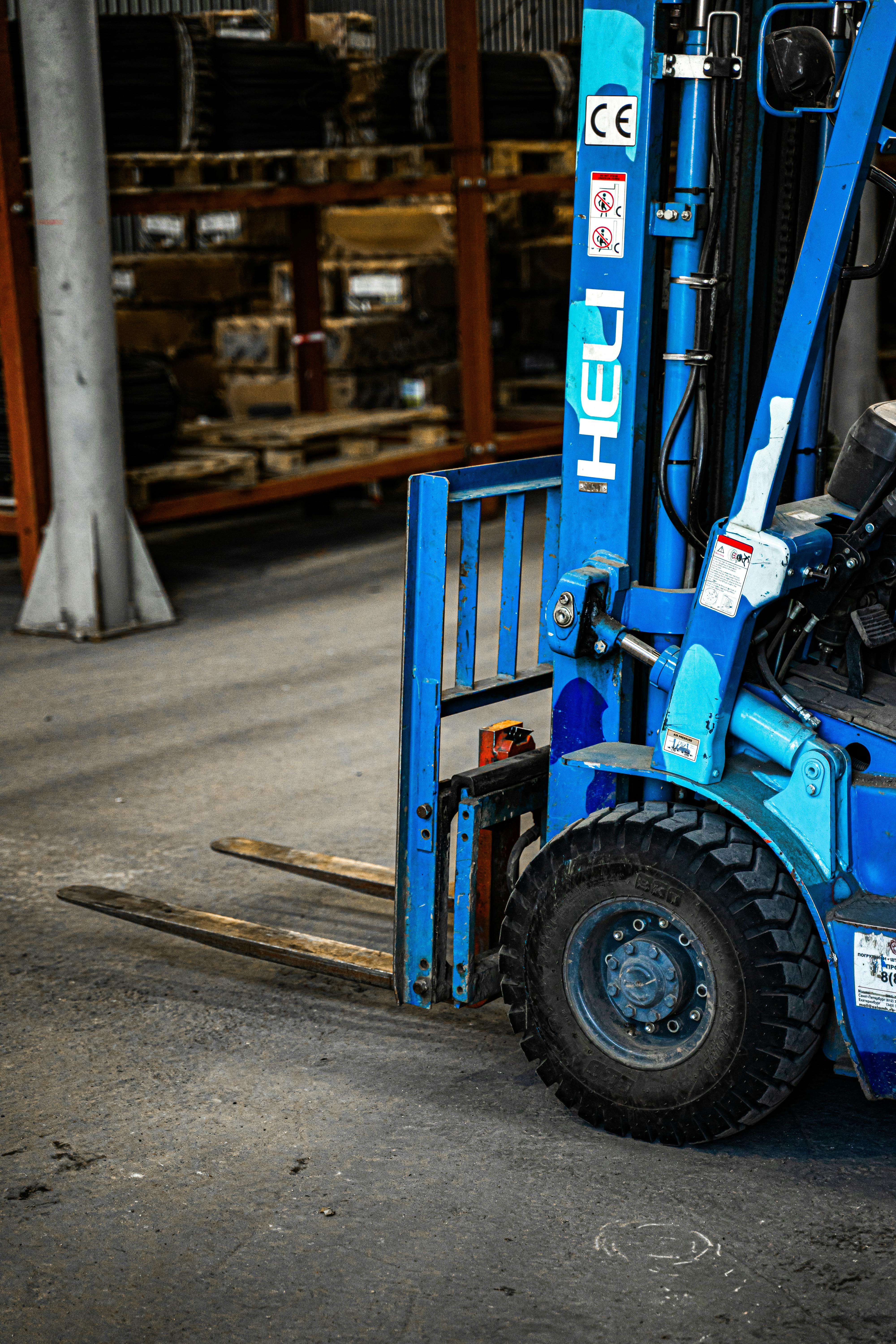
Putaway in rack is where residual capacity and aisle width collide. A 3-wheel helps the turn; a 4-wheel helps the high pick if the pallet is heavy.
When a 3-Wheel Electric Forklift Wins
Choose a 3-wheel electric forklift when most of these are true:
- Indoor, level floors only
- Tight intersecting aisles or short bays
- Pallet weights that stay comfortably inside a 3,000 lb class chart at your real lift height
- Short to medium travel, not cross-campus runs
- You want electric indoor air quality instead of propane (see electric vs. propane forklifts)
Typical GTA fits: retail DC pick modules, light manufacturing cells, pharmaceutical and food plants with clean floors, and older multi-tenant warehouses in Mississauga where the rack was installed after the building.
Do not use a 3-wheel as a cheap substitute for a reach truck. If the aisle was designed for a reach, buy or rent a reach.
When a 4-Wheel Electric Forklift Wins
Choose a 4-wheel electric forklift when most of these are true:
- Heavier pallets or higher stacking
- Dock-to-rack travel on the same truck
- Longer travel between staging and putaway
- Imperfect dock boards or slightly uneven slabs
- You still want zero indoor exhaust
Typical GTA fits: e-commerce fulfillment in Vaughan, food 3PLs with mixed inbound, and plants that already standardized on 4,000-5,000 lb electric sit-downs.
If propane still makes sense for mixed indoor/outdoor or multi-shift without charger investment, keep that option on the table. Do not force an undersized 3-wheel electric onto a dock that already beats up 4-wheel trucks.
3-Wheel vs. Reach Truck vs. Pallet Jack
This decision sits between two other articles on this site.
A pallet jack vs. forklift choice is ground-to-ground. If you never leave the floor, you may not need either electric sit-down.
A reach truck vs. counterbalance choice is about very narrow aisles and high selective rack. A 3-wheel counterbalance is still a counterbalance. It needs more aisle than a reach.
Simple split:
| Job | Better starting point |
|---|---|
| Trailer to staging on the floor | Pallet jack or walkie |
| Tight indoor sit-down stacking | 3-wheel electric |
| Dock plus heavier rack work | 4-wheel electric |
| Very narrow aisle high rack | Reach truck |
Ontario Training, Inspection, and Indoor Air
A 3-wheel electric is still a powered lift truck. Ontario employers train operators, maintain the truck, and document inspections under the Occupational Health and Safety Act. The Ontario Guideline for the Safe Operation and Maintenance of Powered Lift Trucks is the practical Ministry reference.
Tighter turning does not reduce tip-over risk if operators swing with a raised load. Shorter wheelbase trucks need the same pre-shift checks: forks, mast, brakes, horn, battery plug, and leaks.
For inspection cadence, see forklift inspection requirements in Ontario. For operator rules, see forklift operator certification in Ontario.
Electric indoor trucks help air quality versus propane. They do not remove the duty to keep pedestrians out of the travel path.
Rent, Buy Certified Used, or Mix the Fleet
Many Ontario sites should mix chassis instead of standardizing on one brochure.
Rent a 3-wheel when you take a short-term overflow cell, a seasonal pick module, or a unit while your 4-wheel is in the shop. Forklift rental in Mississauga and short-term vs long-term GTA rental cover commercial terms.
Buy certified used when the building layout is stable and hours are high enough that rental burn is obvious. Inspect mast play, battery health, and steer-axle wear on 3-wheels especially. Start with how to buy a used forklift in the GTA.
Finance if cash is the constraint, not the machine. See forklift financing in Ontario.
Q4 volume still argues for rental surge units rather than a second owned chassis that sits in January. That playbook is in peak-season forklift rental in the GTA.
How Alteon Equipment Helps
Alteon Equipment is a forklift dealer in Mississauga, Ontario, with a second location in Arlington, Texas. We sell, rent, and service counterbalance trucks, including electric indoor units, and we help operations managers pick chassis against aisle drawings and load lists, not guesswork.
Bring us:
- Tightest aisle and intersection measurements
- Heaviest pallet weight and load centre
- Highest beam you actually use
- Dock versus indoor-only split
- Shift pattern and charger reality
We will tell you whether a 3-wheel electric forklift, a 4-wheel electric, a reach truck, or a short-term rental mix is the honest answer.
Call +1 905 238 8881 or email Sales@alteonequipment.com.
Conclusion
A 3-wheel electric forklift earns its keep in tight, level Ontario warehouses. A 4-wheel electric earns its keep when capacity, docks, and travel distance show up on the same shift. Measure the aisle and the heaviest high pick before you sign. Alteon Equipment in Mississauga can quote rental or certified used against those numbers.
Related Posts


Post a Comment