


Description
Planning to convert your warehouse forklift fleet from lead-acid to lithium-ion? Discover real-world total cost of ownership, opportunity charging infrastructure requirements, cold storage performance, and electrical capacity planning for GTA operations.
Converting Your Forklift Fleet to Lithium-Ion in Ontario: Real-World ROI, Infrastructure, and Operational Reality
TLDR
Switching an industrial forklift fleet from conventional lead-acid batteries to lithium-ion eliminates daily battery maintenance, dedicated battery charging rooms, and mid-shift battery changes. While lithium-ion packs carry a higher upfront purchase price, high-throughput multi-shift distribution centers and cold storage facilities across the Greater Toronto Area often achieve full payback through reduced utility draw, zero battery watering labor, and consistent voltage output down to empty. Converting requires evaluating facility electrical panels, charger placements, and counterweight ballast requirements. Call Alteon Equipment at +1 905 238 8881 or email Sales@alteonequipment.com to audit your facility's power readiness and model fleet conversion economics.
Table of Contents
- 1. The Push Toward Lithium-Ion Across the GTA
- 2. Total Cost of Ownership: Lead-Acid vs. Lithium-Ion
- 3. Charging Mechanics and Facility Space Recovery
- 4. Cold Storage and High-Throughput Performance
- 5. Engineering Considerations: Weight, Ballast, and Voltage
- 6. Evaluating Your Facility Electrical Capacity
- 7. Fleet Transition Strategies: Drop-In vs. Purpose-Built OEM
- 8. Partnering with Alteon Equipment
1. The Push Toward Lithium-Ion Across the GTA
Material handling operations throughout Mississauga, Brampton, Vaughan, and Milton face escalating warehouse space lease rates, high commercial electricity demand peaks, and persistent technician labor shortages. For decades, flooded lead-acid batteries served as the default energy storage solution for electric counterbalance forklifts, reach trucks, and order pickers.
Managing flooded lead-acid packs imposes significant operational overhead. Conventional lead-acid units demand weekly watering schedules with deionized water, bi-weekly equalization cycles to dissolve sulfate crystallization on lead plates, and dedicated battery wash stations to mitigate corrosive acid mist.
In fast-paced logistics hubs, modern distribution operations are replacing traditional chemistries with lithium-ion power packs, primarily Lithium Iron Phosphate (LFP) and Nickel Manganese Cobalt (NMC). Industrial analysis by UgoWork projects that lithium-ion will account for roughly 30% of industrial lift truck power by 2030, driven by round-trip electrical efficiency gains and the elimination of battery changing rooms.
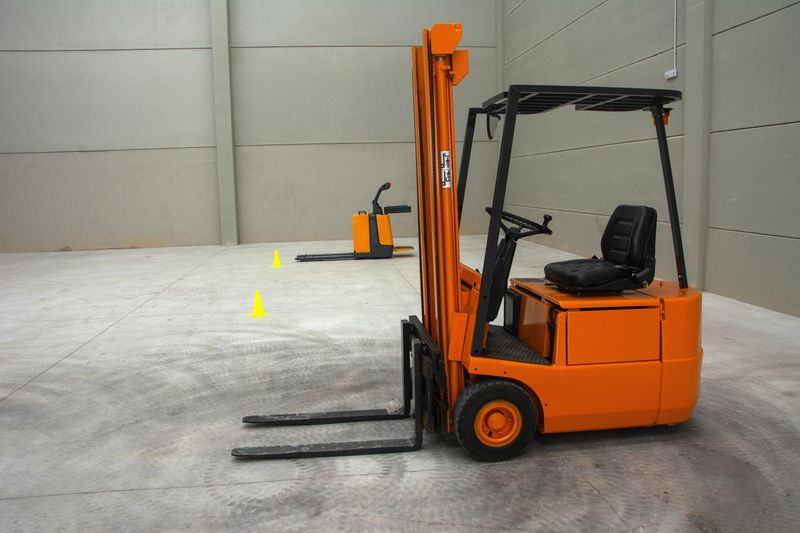
Lithium-ion power packs allow continuous opportunity charging directly on the production floor, eliminating dedicated battery rooms.
2. Total Cost of Ownership: Lead-Acid vs. Lithium-Ion
Assessing fleet power upgrades purely on purchase acquisition price miscalculates true operating expenses. A replacement lead-acid battery represents a lower initial capital outlay, but operating that battery across multi-shift facilities introduces continuous recurring labor, charging losses, and replacement cycles.
Cycle Life Longevity
A well-maintained lead-acid battery typically delivers between 1,000 and 1,500 charge cycles before internal lead plate degradation and active material shedding reduce capacity below 80%. In a 2-shift or 3-shift 24/7 manufacturing plant, a lead-acid battery depletes its rated lifecycle within 3 to 4 years.
Lithium-ion forklift batteries engineered with advanced Battery Management Systems (BMS) achieve 2,500 to 4,000 full equivalent cycles while tolerating partial opportunity charging. For multi-shift GTA operations, a single lithium pack regularly spans 7 to 10 years of dependable service life, outlasting two full generations of lead-acid packs.
Electrical Conversion Efficiency
Energy conversion losses directly impact facility utility expenses. Flooded lead-acid batteries operate at approximately 75% to 80% charging efficiency. Combined with internal resistance and heat dissipation during charging and discharge, round-trip grid-to-truck electrical efficiency sits near 57% to 65%.
Lithium-ion systems achieve approximately 95% to 98% charge acceptance efficiency, reaching overall round-trip efficiency of 87% to 90%. Industrial equipment data compiled by UgoWork demonstrates that high-throughput 3PL facilities running 50 electric units save thousands in cumulative energy waste while lowering facility carbon emissions.
Labor and Maintenance Elimination
Lead-acid maintenance requires dedicated operator time:
- Measuring electrolyte specific gravity with hydrometers.
- Post-charge battery watering to avoid boiled-over acid spills.
- Cleaning battery cases and cable connectors to prevent ground-fault codes.
- Equalizing charges taking 12 to 16 continuous hours over weekends.
Lithium-ion battery packs are fully sealed and maintenance-free. Operators never handle electrolyte, add distilled water, or neutralize acid spills. Fleet managers reallocate maintenance labor toward routine mechanical maintenance, mast chain inspections, and hydraulic system checks.
3. Charging Mechanics and Facility Space Recovery
The operational distinction between the two power sources lies in charging methodology: cycle charging versus opportunity charging.
The 8-8-8 Lead-Acid Rule
Traditional lead-acid protocol follows the strict "8-8-8" rhythm: 8 hours of runtime, 8 hours of continuous charging, and 8 hours of cooling. Attempting to run a hot, freshly charged lead-acid battery damages plate separators and causes premature cell degradation. In two-shift or three-shift facilities, operating one forklift demands two or three separate batteries, requiring overhead hoist cranes, roller stands, and hazardous chemical eye-wash stations.
Opportunity Charging at Rest Breaks
Lithium-ion batteries accept rapid, high-amperage opportunity charging during planned operator rest breaks, shift turnovers, and lunch periods without thermal damage or memory effects:
- A 15-minute morning break adds 15% to 20% state of charge.
- A 30-minute lunch break adds 35% to 45% charge.
- Fast chargers can return a battery from 10% to 80% charge in approximately 60 minutes.
Because charging occurs during normal workflow pauses, a single battery remains permanently installed in the forklift chassis. Multi-shift operations no longer swap heavy 2,000-to-4,000-pound battery packs using bridge cranes or transfer carts, eliminating major lifting pinch hazards and operator injury claims.
Reclaiming Valuable Industrial Floor Space
With warehouse industrial square footage in Peel and York regions commanding premium leasing rates, dedicated battery charging rooms represent idle overhead. A traditional battery room housing 20 charging stations, acid neutralization tanks, and extraction tracks occupies 800 to 1,500 square feet. Converting to decentralized lithium-ion opportunity charging stations along break areas and staging lanes returns that square footage to revenue-generating pallet racking or shipping staging.
4. Cold Storage and High-Throughput Performance
Refrigerated and frozen food storage represents one of the toughest material handling environments. Low temperatures severely reduce the chemical reactivity of liquid electrolyte in lead-acid cells, causing operating capacity to drop by 30% to 50% in sub-zero freezers. Operators frequently experience sluggish lift speeds, weak hydraulic performance, and frequent premature low-voltage warnings.
Lithium-ion batteries maintain flat discharge voltage curves. While a lead-acid battery gradually loses voltage and operating speed as it drops from 100% down to 20%, a lithium pack supplies constant voltage and full hydraulic power right up to full depletion.
Next-generation industrial lithium batteries feature integrated internal heating elements managed by the BMS. When an operator connects the forklift to a charger inside a cold storage vault, internal heaters activate first, ensuring cells accept rapid charging without internal lithium plating. Operations handling temperature-controlled food logistics across southern Ontario maintain round-the-clock throughput without rotating trucks out of freezer aisles.
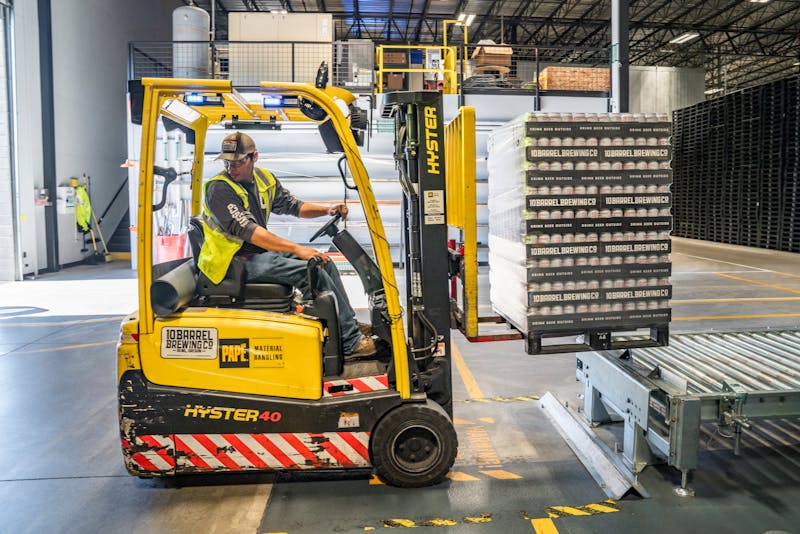
Sustained output voltage ensures constant lifting speeds and hydraulic responsiveness through demanding shift schedules.
5. Engineering Considerations: Weight, Ballast, and Voltage
Upgrading an existing electric lift truck from lead-acid to lithium-ion requires understanding counterbalance engineering.
Counterweight and Ballast Requirements
In an electric counterbalance forklift, the battery serves a double duty: power source and functional counterweight. A standard 36-volt or 48-volt lead-acid battery weighs between 2,200 and 4,500 pounds.
Because lithium chemistry offers significantly higher energy density, a lithium battery pack providing equivalent electrical capacity weighs roughly one-third of a comparable lead-acid block. Installing an unballasted lightweight lithium pack directly into a forklift compromises vehicle longitudinal stability, lowering the unit's safe tipping capacity.
Reputable forklift equipment dealers ensure that retrofit lithium conversions feature heavy steel casing ballast matching the original OEM battery data plate minimum weight specification. Maintaining proper chassis ballast preserves original load charts, center of gravity ratings, and annual lifting device inspection certifications under Ontario Regulation 851.
CANbus Communication and System Integration
Modern electric lift trucks communicate between motor controllers, displays, and hydraulic valves via CANbus networks. Advanced lithium-ion batteries communicate directly with truck controllers, reporting real-time cell temperatures, exact state of charge, and discharge limits. When planning a conversion, verify whether the battery BMS software integrates with your specific forklift make and model, preventing false instrument cluster error codes or unexpected power shutdowns.
6. Evaluating Your Facility Electrical Capacity
Transitioning to opportunity charging shifts electrical demand profiles. While lead-acid systems charge slowly over an 8-hour window at lower amperages, fast lithium opportunity chargers draw higher momentary electrical power to recharge packs within short rest breaks.
Before converting a multi-truck fleet, perform an electrical audit:
- Service Entrance and Subpanel Amperage: Verify your distribution panel has adequate breaker capacity to support high-output 480V 3-phase chargers.
- Peak Demand Charges: In Ontario, industrial power consumers subject to Class A or Class B utility billing must monitor peak demand intervals. Installing smart chargers with staggered scheduling or load-balancing software prevents multiple lift trucks from simultaneously spiking facility electrical draw during 15-minute shift breaks.
- Charger Placement Strategy: Position modular chargers near break rooms, packing lines, or shipping docks where operators naturally park equipment during scheduled downtime.
7. Fleet Transition Strategies: Drop-In vs. Purpose-Built OEM
Warehouse and operations managers choose between two primary paths when modernizing their material handling fleet:
| Conversion Path | Ideal Application | Key Advantages | Primary Considerations |
|---|---|---|---|
| Drop-In Retrofit Packs | Existing late-model electric fleets with 5+ years of chassis life remaining | Leverages existing equipment equity; lower initial investment than new trucks | Requires certified ballast to meet minimum battery weight; BMS-to-chassis communication checks |
| Purpose-Built Lithium Forklifts | Fleet additions, replacements for aging trucks, or new facility buildouts | Ergonomic operator compartments (no bulky battery box); lower center of gravity; tighter turning radius | Requires purchasing or leasing new equipment units |
| Long-Term Rental / Lease | Operations prioritizing predictable monthly operating expenses | Up-to-date technology; bundled preventative maintenance; zero disposal risks | Multi-year contractual commitment |
8. Partnering with Alteon Equipment
Converting to electric or upgrading existing battery systems requires experienced equipment guidance. Alteon Equipment supports industrial facilities across the Greater Toronto Area and Arlington, Texas with certified equipment solutions, comprehensive technical support, and flexible acquisition options.
Our team evaluates your current operating hours, shift patterns, mast heights, and electrical infrastructure to determine whether lithium-ion conversion, certified late-model electric equipment, or a tailored forklift rental program best serves your bottom line.
Every piece of equipment supplied by Alteon undergoes rigorous multi-point mechanical inspections, mast chain certifications, and brake safety verifications under Ontario safety standards, backed by reliable warranty coverage.
Contact our material handling specialists today to review your fleet requirements, evaluate trade-in credit on your existing machinery, or arrange an on-site equipment demonstration.
- Canada Branch: 1400 Aimco Blvd Unit 26-27, Mississauga, ON L4W 1B2
- Direct Phone: +1 905 238 8881
- Customer Support & Inquiries: Sales@alteonequipment.com
- Website: alteonequipment.com
Related Posts


Post a Comment