


Description
Wondering what your used forklift is worth? Discover the primary factors that determine forklift trade-in value in Ontario and how GTA fleet managers get maximum credit toward fleet upgrades.
How to Value a Forklift Trade-In in Ontario: What Dealers Look For and How to Maximize Fleet Credit
TLDR
Forklift trade-in value in Ontario hinges on operating hours, maintenance records, mast configuration, powertrain condition, and overall cosmetic integrity. Units with under 10,000 operating hours and complete preventative maintenance documentation command the strongest appraisal values. Upgrading aging equipment through a structured dealership trade-in program reduces capital outlay, avoids costly unplanned downtime, and eliminates private resale logistics. Contact Alteon Equipment at +1 905 238 8881 or email Sales@alteonequipment.com to schedule an on-site fleet appraisal across the Greater Toronto Area.
Table of Contents
- 1. Understanding Forklift Trade-In Economics
- 2. The 5 Core Factors Dealers Evaluate
- 3. Hour Thresholds: The Forklift Depreciation Curve
- 4. Electric vs. Internal Combustion Trade-In Nuances
- 5. Step-by-Step Preparation Checklist Before Appraisal
- 6. Trade-In vs. Private Sale: The B2B Reality
- 7. Partnering with Alteon Equipment for Fleet Upgrades
1. Understanding Forklift Trade-In Economics
Material handling equipment operates as production machinery rather than passenger transport. When operations managers across Mississauga, Brampton, Vaughan, and Milton assess aging lift trucks, calculating fair trade-in value requires understanding dealer economics.
Dealers evaluate used machines through wholesale appraisal models. When a dealership accepts a trade-in unit, service technicians thoroughly inspect the machine, complete necessary mechanical repairs, perform mandatory annual lifting device inspections under Ontario Regulation 851, install new safety equipment, and back the refurbished unit with a dealership warranty.
According to equipment valuation analyses by Total Industries, proactive equipment care and structured trade-in timing allow businesses to capture significant equity before machines reach catastrophic mechanical failure stages. Trading in an older forklift offsets the capital cost of a certified late-model replacement or a new long-term rental contract while eliminating the hassle of off-site equipment disposal.
2. The 5 Core Factors Dealers Evaluate
During an on-site physical appraisal, commercial technicians and used equipment appraisers review five key areas:
1. Documented Preventative Maintenance History
A complete paper or digital maintenance log is the single most valuable asset a seller can present. Documented 250-hour preventative maintenance visits prove that engine oil, hydraulic filters, transmission fluid, and mast chains received routine professional care. Machines with verifiable service logs receive significantly higher appraisals than identical units with unverified histories.
2. Mast Specifications and Hydraulic Attachments
Standard three-stage (FSV) masts with lift heights between 187 and 189 inches hold the highest broad-market resale appeal for GTA warehouse facilities. Integrated sideshifters add immediate value. Specialized attachments, such as carton clamps, rotators, or fork positioners, increase trade-in credit provided the data plate reflects certified attachment derating and hydraulic relief pressures meet factory specifications.
3. Structural Condition: Forks, Chains, and Steer Axle
Appraisers inspect critical load-bearing assemblies with precision measuring tools:
- Fork Blades and Heel: Caliper measurements showing more than 10% heel wear mandate immediate fork replacement, directly reducing appraisal credit.
- Lift Chains: Pitch elongation exceeding 2% to 3% requires full chain and leaf replacement.
- Steer Axle Knuckles and Kingpins: Excessive play or steering link binding indicates harsh warehouse floor conditions or deferred lubrication.
4. Powertrain and Hydraulic Integrity
For internal combustion (LPG/diesel) units, technicians conduct cold-start tests, check for exhaust smoke, verify cooling radiator cleanliness, and inspect hydraulic control valves for weeping seals. Hydraulic pump pressure must meet manufacturer relief valve ratings under rated load testing.
5. Cosmetic Presentation and Cab Integrity
While industrial equipment naturally accumulates surface scuffs, severe chassis dents, cracked overhead guards, bent carriage bars, or torn operator seats suggest aggressive driving and potential hidden frame stress. A clean, pressure-washed machine with intact safety decals and operational lighting presents immediate confidence.

Documented preventative maintenance and regular hydraulic inspections preserve maximum trade-in equity on industrial lift trucks.
3. Hour Thresholds: The Forklift Depreciation Curve
Unlike automotive mileage, forklift usage measures operational engine and hydraulic run hours. One operating hour on an industrial forklift corresponds to roughly 30 to 40 miles of automotive engine wear.
Equipment lifecycle benchmarks from The Forklift Pro establish distinct trade-in valuation tiers:
| Operating Hour Range | Expected Market Valuation Tier | Operational Reality |
|---|---|---|
| 0 to 5,000 Hours | Premium Trade-In Value | Prime commercial condition; light single-shift warehouse service; minimal mechanical overhaul required. |
| 5,001 to 9,500 Hours | Strong Trade-In Value | Mid-life fleet standard; high secondary market demand; requires standard 250/1,000-hour service and tire dressing. |
| 9,501 to 12,500 Hours | Moderate / Reduced Value | Approaching major powertrain or hydraulic overhaul intervals; dealer discount factors in upcoming component refurbishments. |
| 12,501 to 16,000 Hours | Low Trade-In Credit | Advanced mechanical wear; high cumulative cycle fatigue; primarily suited for backup yard service or economy resale. |
| 16,001+ Hours | Core / Salvage Appraisal | End of economic design life; evaluated primarily on component salvage and raw equipment scrap value. |
Facilities that trade in equipment between the 8,000 and 10,000-hour marks consistently achieve the optimal return on initial capital, capturing peak trade-in equity before major hydraulic cylinder rebuilds, transmission replacements, or engine overhauls deplete operating budgets.
Review our detailed guide on how much forklift maintenance and service costs in Ontario to evaluate your fleet repair trajectories.
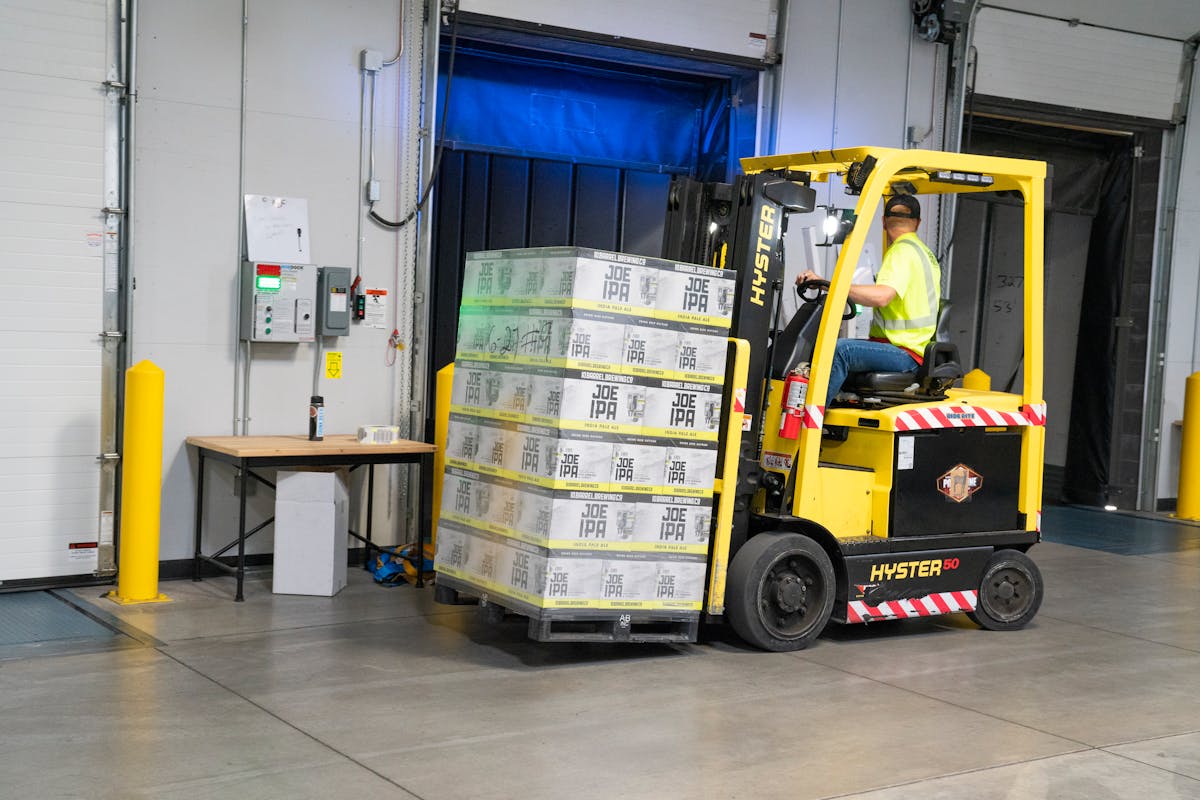
Documenting regular maintenance and operational hours is critical for maximizing trade-in value across both electric and internal combustion fleets.
4. Electric vs. Internal Combustion Trade-In Nuances
Fuel type significantly alters appraisal methodology:
Electric Counterbalance and Reach Trucks
For electric forklifts, the traction battery and charger represent up to 30% to 40% of the machine total market valuation.
- Battery Health: Appraisers inspect cell voltage balance, specific gravity readings across lead-acid cells, terminal corrosion, and tray integrity. A forklift with an end-of-life battery requires a multi-thousand-dollar replacement, significantly lowering trade-in credit.
- Lithium-Ion Conversion: Modern factory-integrated or certified drop-in lithium-ion battery packs with verified battery management system (BMS) health logs attract strong commercial demand across clean-warehouse sectors like pharmaceuticals, packaging, and food distribution.
- Matching Charger: Providing an operational, voltage-matched industrial charger completes the package and increases immediate dealer trade-in credit.
For deeper insights into electric fleet management, read our breakdown on electric forklift battery charging, room design, and uptime.
LPG and Diesel Counterbalance Units
Internal combustion units face heavy operational duty cycles in lumber yards, manufacturing plants, and cross-dock terminals. Appraisers examine propane regulator condition, catalytic exhaust scrubbers, mast carriage bearings, and cooling system efficiency to verify the truck operates safely within enclosed or semi-enclosed industrial spaces.
5. Step-by-Step Preparation Checklist Before Appraisal
Taking deliberate preparatory steps prior to dealer inspection ensures your equipment achieves top-dollar appraisal:
- Pressure Wash the Machine: Thoroughly clean grease buildup, mast oil residue, and warehouse road grime. A clean unit allows appraisers to inspect welds and castings without obstruction.
- Compile Full Maintenance Logs: Organize all work orders, oil change intervals, chain inspections, and annual safety inspection certificates into an accessible binder or digital folder.
- Fix Inexpensive Minor Defects: Replace cracked horn buttons, broken headlight lenses, blown backup alarm buzzers, or shredded rubber pedal pads. Addressing minor defects eliminates easy dealer discount deductions.
- Locate Data and Capacity Plates: Ensure the stamped metal data plate is fully legible, securely riveted, and matches the mast and attachment configuration. A missing data plate requires OEM recertification, which delays appraisal.
- Charge Battery or Supply Fuel: Ensure the machine starts smoothly and demonstrates full mast elevation, tilt, and attachment movement during the initial physical inspection.
6. Trade-In vs. Private Sale: The B2B Reality
Many operations managers question whether to sell used lift trucks privately on equipment classifieds or trade them in directly with a commercial dealership:
- Private Resale Drawbacks: Private buyers demand extensive mechanical warranties, tie up internal staff with repeated inspection visits, haggle aggressively, and often lack heavy machinery transport capabilities, creating liability risks on your loading dock.
- Dealership Trade-In Benefits: Dealerships provide immediate equipment credit toward your replacement purchase or long-term lease. The dealer assumes full mechanical liability, manages heavy tilt-and-load float transportation directly from your dock, and coordinates delivery so your operators experience zero production downtime.
If your facility is currently reviewing fleet replacement options, explore our comparative analysis on new vs. used forklifts in Ontario and our framework for purchasing used forklifts in the GTA.
7. Partnering with Alteon Equipment for Fleet Upgrades
Alteon Equipment provides comprehensive equipment trade-in, certified used sales, and fleet acquisition programs across the Greater Toronto Area and Southern Ontario. Whether trading in a single 5,000-lb LPG counterbalance truck or retiring a multi-unit electric reach truck fleet, our experienced appraisal team provides transparent, fair-market valuations.
We accept all major commercial brands, including Toyota, Raymond, Hyster, Yale, Crown, Cat, and BT, and apply trade-in credits seamlessly toward certified late-model inventory, new rental contracts, or flexible lease-to-own financing solutions.
Ready to evaluate your equipment trade-in value?
- Call Our Mississauga Facility: +1 905 238 8881
- Email Equipment Details: Sales@alteonequipment.com
- Visit Our Showroom: 1400 Aimco Blvd Unit 26-27, Mississauga, ON L4W 1B2
- Website: alteonequipment.com

Post a Comment